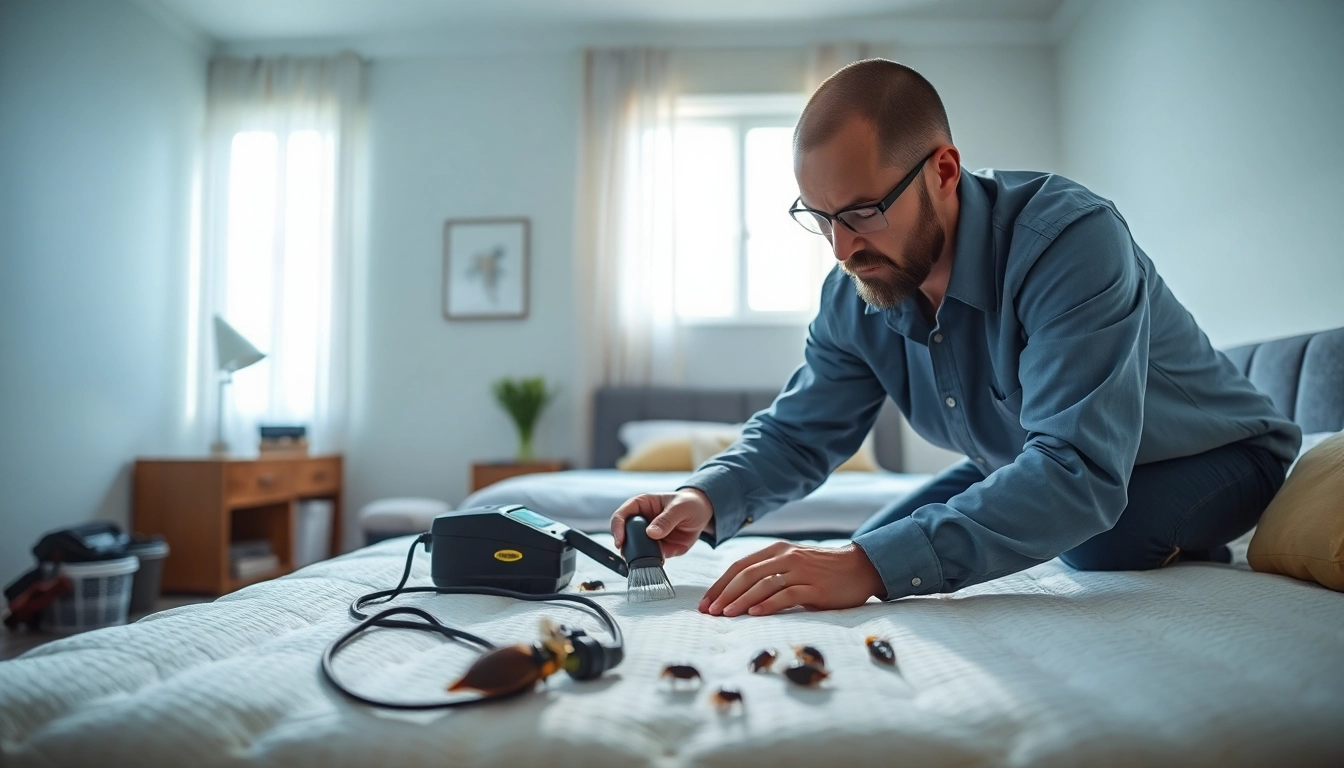
Understanding Bed Bugs and Their Habits
Bed bugs are small, wingless insects that belong to the Cimex genus. Known for their nocturnal habits and blood-feeding tendencies, they have become a widespread nuisance, particularly in urban areas. Understanding the biology and habits of bed bugs is crucial for effective bed bug removal. This section will delve into the identification, life cycle, and behavior of these pests.
Identification: How to Recognize Bed Bugs
Bed bugs are typically about 4 to 5 millimeters in length and have a flat, oval-shaped body that turns reddish-brown after feeding. Their shape and size make them easy to overlook. Key identifiers include:
- Color: Reddish-brown, especially after a feeding.
- Body Shape: Flat and oval when unfed; swollen and elongated after feeding.
- Eggs: Tiny, white, and approximately 1 mm in size; often laid in dark crevices.
In addition to visual cues, their presence can often be inferred through bite marks on the skin, which appear as small, itchy welts often in groups or lines.
Life Cycle: Understanding the Bed Bug Lifecycle
Bed bugs undergo a simple life cycle consisting of three main stages: egg, nymph, and adult. Each stage has different behaviors and challenges for those dealing with an infestation:
- Egg: A female can lay up to 500 eggs in her lifetime, usually in clusters, making early detection crucial.
- Nymph: After about 5 to 10 days, eggs hatch into nymphs, which are transparent and require blood meals to mature.
- Adult: Adults can live for several months to over a year without feeding, making them particularly resilient.
Understanding this life cycle can inform control strategies by emphasizing the need for thorough treatments over a series of weeks or months.
Behavior: Where to Find Bed Bugs in Your Home
Bed bugs prefer to dwell in warm, dark places close to their food source—humans. Common locations include:
- Mattresses and box springs
- Bed frames and headboards
- Couches, chairs, and their cushions
- Behind wallpaper and baseboards
- In luggage, purses, and personal items
Regular inspections of these areas can help identify infestations before they become severe.
Signs of Bed Bug Infestation
Detecting bed bug infestations can be challenging. However, several signs can indicate their presence.
Physical Signs: Bites and Marks on Skin
One of the most apparent signs of a bed bug infestation is the presence of bite marks on the skin. These bites can lead to:
- Itchy welts that may be mistaken for mosquito bites.
- Groupings of bites, often in straight lines or clusters, particularly on exposed skin.
While some individuals may not react to bites at all, early detection can significantly ease the removal process.
Environmental Signs: Fecal Stains and Shed Skins
Another common sign of infestation is discovering small dark spots on bedding or walls, which are fecal stains from feeding. Additionally, cast skins of nymphs, which they shed as they grow, can also indicate a problem.
Behavioral Signs: Unusual Sleeping Patterns
Infestations can lead to changes in sleeping habits, causing increased awakenings during the night and anxiety related to the fear of bites. If you notice unusual patterns, inspect your sleeping quarters for these unwelcome pests.
Effective Bed Bug Removal Techniques
Once you identify the presence of bed bugs, the next step is implementing effective removal techniques. These methods can either be professional treatments or DIY strategies.
Professional Treatments: When to Seek Help
In many cases, seeking professional help is the most effective way to deal with a severe infestation. Pest control professionals have access to a variety of treatment methods, such as:
- Pesticides: Chemicals that target bed bugs while ensuring safety for humans and pets when applied correctly.
- Heat Treatment: Raising indoor temperatures to levels that kill bed bugs in all life stages.
- Integrated Pest Management (IPM): Combining multiple strategies to eliminate and prevent bed bugs.
Professional treatments typically require multiple visits and can vary in time and cost depending on the severity of the infestation.
DIY Methods: Strategies to Try at Home
If the infestation is minor, there are DIY methods you can try before resorting to professional help. These strategies include:
- Heat Treatment: Washing bedding and clothing in hot water and drying them on the highest settings.
- Vacuuming: Regularly vacuuming your living space and using vacuum bags that can be discarded securely.
- Encasements: Covering mattresses and box springs with protective covers to prevent bed bugs from entering or escaping.
While these methods can effectively reduce bed bugs, complete eradication often requires an expert approach.
Follow-Up: Ensuring Comprehensive Removal
After implementing removal strategies, it’s crucial to monitor the situation closely. Use the following methods as follow-ups:
- Check for signs of new activity regularly.
- Continue to enforce preventive measures even weeks after removal.
- Educate family members about spotting bed bugs.
A proactive approach ensures the prevention of reinfestation.
Preventing Bed Bug Reinfestation
Preventing reinfestation is just as important as eradication. Here are strategies to ensure your home remains bed bug-free.
Regular Inspections: Keeping an Eye Out
Conducting regular inspections can be key to early detection. Focus on:
- Checking luggage and personal items after travel.
- Regular assessments of bedding and upholstered furniture.
- Monitoring public spaces like hotels or transit for signs of bed bugs.
Be thorough; a proactive inspection can save you from a larger problem later.
Protective Measures: Using Covers and Barriers
Investing in protective measures like bed bug-proof mattress encasements can significantly lower the chances of a reinfestation. These encasements trap any bugs present while preventing new ones from entering.
Travel Tips: Avoiding Bed Bugs on the Move
Travelers can introduce bed bugs into their homes unknowingly. Here are some helpful tips to avoid bringing them back:
- Inspect hotel rooms for signs of bed bugs before settling in.
- Keep luggage elevated and away from the bed.
- Wash clothes immediately upon returning home.
Being vigilant during travel can prevent a potentially embarrassing and costly infestation.
Frequently Asked Questions about Bed Bug Removal
What is the average cost of bed bug removal?
The cost of bed bug removal varies widely based on the severity of the infestation and treatment options, typically ranging from $100 to $1,500.
How long does a bed bug treatment take to be effective?
Bed bug treatments can take anywhere from a few days to several weeks to be fully effective, as multiple treatments may be necessary.
Can I treat bed bugs on my own?
Yes, you can attempt DIY treatments. However, severe infestations often require professional intervention for complete eradication.
What are the most effective home remedies for bed bugs?
Effective home remedies include heat treatment, vacuuming, and using oils like tea tree oil, though results may vary.
How can I prevent bed bugs from returning?
Preventing reinfestation involves regular inspections, using protective mattress encasements, and being cautious during travel.